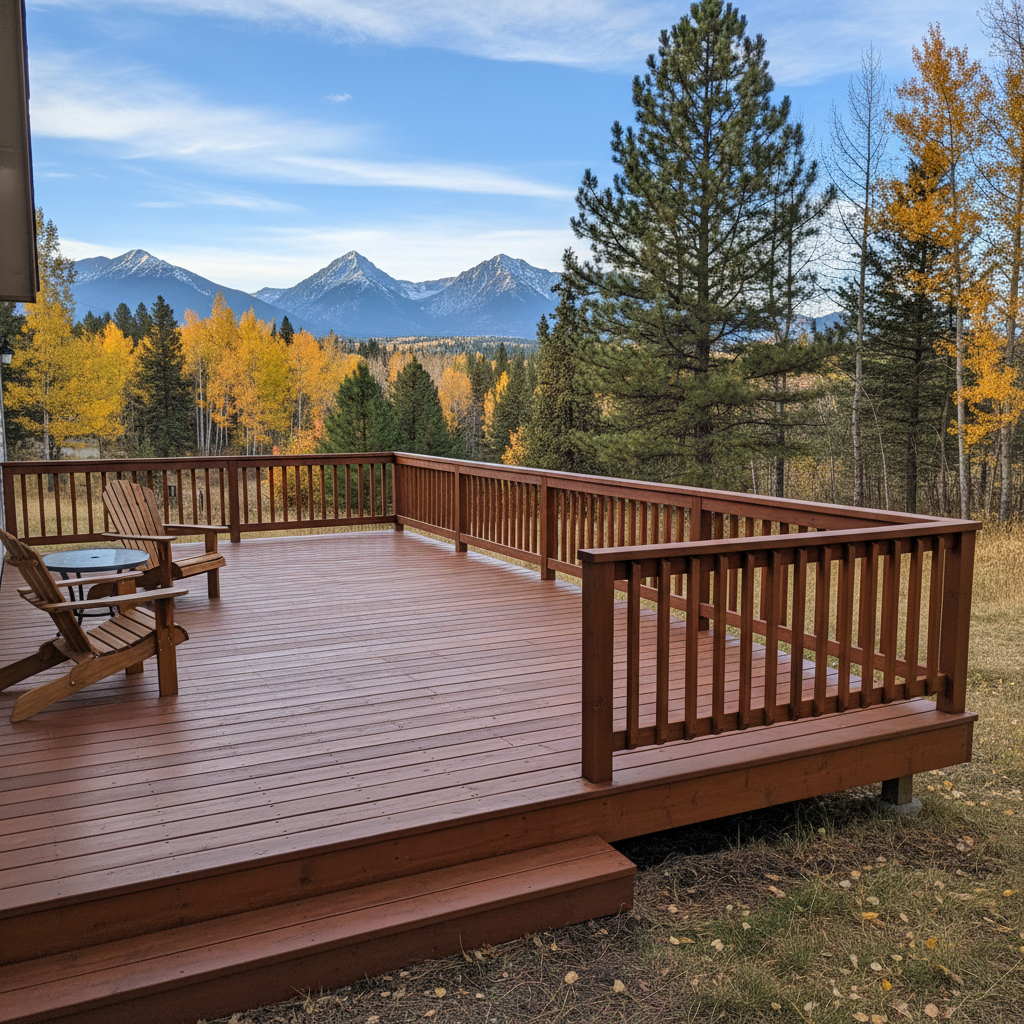
Alright, let's talk decks. You've got one, and you want it to look good and last, right? That means staining. And around Victor, MT, knowing the right time and conditions for that is, well, half the battle. You can't just slap stain on whenever you feel like it; Mother Nature definitely has a say, especially with our Bitterroot Valley climate.
When to Stain Your Deck
Timing is absolutely everything when it comes to deck staining. You're really looking for a sweet spot, usually sometime from late spring through early fall. What you truly need is a solid stretch of stable weather. I'm talking a few days where it's dry, temperatures are moderate—not too hot, not too cold—and definitely not too humid.
Here’s a quick rundown:
- Spring (late May through June): This often works out perfectly. The wood has had a chance to dry out after winter snow and all those spring rains. Temperatures usually sit in that 50-85°F range, which is just right for most stains to cure correctly. Just keep an eye out for those late spring showers; you really need a solid few days of clear skies.
- Summer (July through August): This can be a good time, but you've got to be smart about it. Those scorching, sunny Victor afternoons can make stain dry way too fast. That leads to uneven application or the stain not soaking in properly. Try to stain in the morning or late afternoon, when the deck isn't baking in direct sunlight. If it's pushing 90°F or more, you're probably better off waiting.
- Fall (September through early October): Another excellent window. The intense summer heat is gone, and you often get those crisp, clear days. The main thing here is watching the overnight temperatures. If it's dipping below 45°F at night, you risk the stain not curing right. And you definitely don't want to be staining when the first hard frosts are just around the corner.
The biggest takeaway? Don't rush it. Waiting for the right conditions will save you a ton of headaches—and money—in the long run.
Weather Conditions That Really Matter
It's not just about the month; it’s all about the daily forecast. Here’s what I've seen make or break a deck staining job:
- Temperature: Most stains suggest you apply them between 50°F and 85°F. Too cold, and the stain won't penetrate or cure properly; you'll end up with a tacky finish or peeling. Too hot, and it dries on the surface too quickly, stopping it from soaking into the wood and giving you ugly lap marks.
- Humidity: High humidity, like those muggy summer days right before a thunderstorm, really slows down drying time. This can leave your deck vulnerable to dust, bugs, or even rain before it’s fully cured. We don't get a ton of super high humidity here in the valley, but it happens, and you need to be aware.
- Rain: This one's a no-brainer. You need at least 24-48 hours of dry weather *after* you apply the stain. And ideally, the deck should be completely dry for a few days *before* you even start. If you've got a deck that gets hit by sprinklers or sits under a big cottonwood tree that drips dew, plan accordingly.
- Direct Sunlight: Like I mentioned, direct, intense sun can be a real problem. It heats the wood surface, causing the stain to flash dry. Try to work in shaded areas or during the cooler parts of the day.
- Wind: A gentle breeze? That's fine, even helpful for drying. But strong winds? Oh boy, they'll blow dust, leaves, and all sorts of crud onto your wet stain. Plus, they can make spraying or even brushing a real pain.
Always check the local forecast for Victor before you start. And I mean the *detailed* forecast, not just the high temp. Look at those overnight lows and the chance of precipitation for the next few days.
Protecting Your Investment Year-Round
Staining is a big step, sure, but it’s not a one-and-done deal. Here’s how to keep that deck looking great and protected:
- Clean Annually: Every spring, give your deck a good cleaning. Use a deck cleaner (not just bleach, which can actually damage wood fibers) and a stiff brush. Pressure washing is okay if you really know what you're doing and use a wide fan tip at low pressure; otherwise, you can splinter the wood. This gets rid of dirt, mildew, and grime that can break down your stain.
- Inspect for Damage: While you're cleaning, look for any signs of wear. Are there spots where the stain has faded or peeled? Any loose boards or nails popping up? Catching these issues early prevents bigger problems down the road.
- Re-stain as Needed: Most decks need re-staining every 2-4 years. It really depends on the stain type, how much sun it gets, and how much traffic it sees. Decks that get blasted by the afternoon sun, especially those facing west towards the Bitterroot Mountains, might need it more often. You'll know it's time when water no longer beads on the surface, or the color starts to look dull and washed out.
- Winter Prep: Before winter hits, make sure your deck is clean and clear of debris. Don't let leaves sit on the surface all winter; they trap moisture and can lead to mildew and wood rot. If you've got potted plants, move them off the deck or elevate them so they don't sit directly on the wood and trap moisture.
- Snow Removal: When the snow flies, try to clear it off your deck if you can. A plastic shovel is best to avoid scraping the stain. Letting heavy snow sit for months can really contribute to moisture damage.
Taking care of your deck is just like taking care of anything else around your home. A little regular maintenance goes a long way. If you're ever unsure about the best stain for your Victor deck or when to apply it, don't hesitate to reach out. We've seen a lot of decks in the Bitterroot Valley, and Bitterroot Valley Custom Painting is always happy to offer advice.